INDIGENOUS NCDS
  • ABOUT
    • Board Bio's >
      • Tania Brown
      • Summer May Finlay
      • Kaitlyn Hunsberger
      • Kate Armstrong
    • Our Values
    • Our Team
    • Our Purpose
    • Our Story
    • Strategic Direction
  • What We Do
    • Engagement model
  • COUNTRIES
    • Australia
    • Canada
    • USA
    • New Zealand
  • ALLIES
    • Caring & Living As Neighbours (CLAN)
  • IMPACT
  • Join Us
  • RESOURCES
    • National Agreement on Closing the Gap
    • Uluru Statement from the Heart
    • WHO- Factsheet on Indigenous Peoples
    • UNDRIP
    • NACCHO
    • Healing foundation
    • Civil Society Resource Library
    • Statements, Submissions and Briefing papers
    • Publications and Media
    • Research and Policy
    • Health Topic Factsheets and Toolkits
    • Definitions
  • Get Involved/Careers
  • News and Events
    • Blog
  • Donate

ABOUT

The leadership, strengths and wisdom of Indigenous Communities have much to offer the world as we seek to reduce the preventable and inequitable burden of non-communicable diseases (NCDs) on morbidity and mortality. 
There are approximately 370 million Indigenous Peoples worldwide, in over 90 countries, and although they make up 5 percent of the global population, Indigenous Peoples account for about 15 percent of the extreme poor (1) and experience an inequitable burden of NCDs. This is related in no small way to a range of social, cultural, political and commercial determinants of health, including but not limited to: high rates of poverty and inequality; high unemployment rates; low education opportunities; poor diet (due to unaffordable availability of fruits/vegetables); higher rates of infectious disease burden - especially amongst children; higher burden of life-style related NCDs amongst adults (2); racism; removal of children from families and the myriad other consequences of transgenerational trauma associated with colonisation. Indigenous peoples are experiencing a transition from traditional to transitional and modern lifestyles and with this, an increased prevalence of NCDs (3).


Indigenous Peoples and the Global NCD Discourse
Historically, Indigenous peoples have not been meaningfully engaged in the global NCD discourse. In early 2018, in the lead up to the Third United Nations High Level Meeting (UNHLM) on NCDs, several groups came together to discuss growing concerns with the lack of acknowledgement and inclusion of Indigenous Peoples.

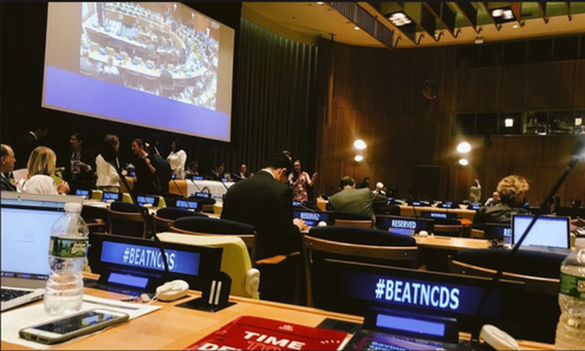
In May 2018, Indigenous Working Group representatives of the World Federation of Public Health Associations held a side event at the World Health Assembly in Geneva and participated in several NCD forums. On 5 July 2018, CLAN was proud to facilitate the attendance of three Indigenous representatives from Canada and the United States of America to attend the UN Civil Society Hearing on NCDs in New York on 5 July 2018.

IndigenousNCDs was founded in June 2018 in response to the 
Draft Declaration released by the United Nations (UN) on 6 June 2018, ahead of the Third High Level Meeting on Non-Communicable Diseases scheduled to be held in New York on 27 September 2018. Neither this Draft, nor the final Political Declaration emerging from this meeting included any mention of Indigenous Peoples or Cultures.

In 2025, the Fourth UN HLM on NCDs will be held in New York on 25 September. Again, the Draft Political Declaration in 2025 does not include any acknowledgement of Indigenous peoples. IndigenousNCDs calls for a final Declaration that:

• Explicitly names Indigenous Peoples as priority populations
• Is culturally inclusive and rights-based and
• Commits to resourcing Indigenous-led solutions and governance.

For more information please read this ​call_for_acknowledgement_of_indigenous_peoples_-_2025.pdf.


IndigenousNCDs receives Secretariat support from CLAN (Caring & Living As Neighbours). IndigenousNCDs acknowledges the generosity of Croakey Health Media for their support with the development of our logo.
​
Picture
Proudly powered by Weebly
  • ABOUT
    • Board Bio's >
      • Tania Brown
      • Summer May Finlay
      • Kaitlyn Hunsberger
      • Kate Armstrong
    • Our Values
    • Our Team
    • Our Purpose
    • Our Story
    • Strategic Direction
  • What We Do
    • Engagement model
  • COUNTRIES
    • Australia
    • Canada
    • USA
    • New Zealand
  • ALLIES
    • Caring & Living As Neighbours (CLAN)
  • IMPACT
  • Join Us
  • RESOURCES
    • National Agreement on Closing the Gap
    • Uluru Statement from the Heart
    • WHO- Factsheet on Indigenous Peoples
    • UNDRIP
    • NACCHO
    • Healing foundation
    • Civil Society Resource Library
    • Statements, Submissions and Briefing papers
    • Publications and Media
    • Research and Policy
    • Health Topic Factsheets and Toolkits
    • Definitions
  • Get Involved/Careers
  • News and Events
    • Blog
  • Donate